

What Mistakes Should EPC Engineers Avoid When Sizing an Automatic Self-Cleaning Filter for Plant Retrofit?
Release time: 2026-09-14
Table of Contents
Sizing an automatic self-cleaning filter system for a plant retrofit requires more than matching the existing pipe diameter. EPC engineers need to assess actual hydraulic conditions, solids loading, water chemistry, pressure limits, installation constraints, and automation requirements before selecting equipment.
A correctly specified system can protect downstream assets, reduce manual cleaning, and support continuous process operation. An undersized or poorly configured filter can lead to high pressure loss, frequent cleaning cycles, unstable flow, inadequate solids removal, and unnecessary maintenance costs.
Avoid Sizing Only by Pipe Diameter
Existing pipe diameter is an important connection detail, but it is not a complete basis for filter selection. A filter with the same nominal inlet and outlet size may still have insufficient screen area or hydraulic capacity for the process.
The filter should be selected according to verified operating data, including minimum flow, normal flow, maximum flow, peak demand, pump head, allowable pressure loss, and future capacity requirements.
A cooling-water system, for example, may run at a relatively stable flow for much of the year but experience higher demand during peak ambient temperatures or full production periods. If the filtration equipment is selected only for average flow, excessive pressure loss may occur during the most demanding operating conditions.
Avoid Using Average Flow as the Design Basis
Average flow does not always reflect the most demanding operating condition. Industrial systems can experience temporary surges during startup, flushing, batch production, seasonal changes, or simultaneous equipment operation.
The design flow should reflect the highest realistic continuous operating requirement. EPC engineers should also check whether short-duration peak flows can pass through the filter without exceeding acceptable pressure-loss limits.
A properly selected self-cleaning automatic filter should maintain stable hydraulic performance across the complete operating range rather than only under average conditions.
Avoid Ignoring Solids Loading
Flow rate alone does not determine the required filter capacity. Solids loading has a direct impact on cleaning frequency, pressure stability, and long-term operating performance.
Important factors include suspended solids concentration, particle-size distribution, particle hardness, sand, scale, corrosion debris, algae, fibers, organic matter, and seasonal variations in raw-water quality.
The practical solids-loading relationship is:
A higher solids loading may require a larger filtration area, a more robust cleaning mechanism, a larger drain connection, upstream coarse screening, or parallel filtration equipment. If solids loading is underestimated, the filter may initiate cleaning too frequently and struggle to maintain stable differential pressure.
Avoid Selecting an Unnecessarily Fine Screen
A finer micron rating is not automatically a better engineering choice. Fine screens can increase clean pressure loss, shorten cleaning intervals, require more backwash water, and increase operating complexity.
Filtration precision should be selected according to the equipment being protected.
| Downstream equipment | Main filtration concern |
|---|---|
| Heat exchangers | Sand, sediment, scale, debris, and biological matter |
| Cooling towers | Corrosion products, fibers, suspended solids, and biological contaminants |
| Spray nozzles | Fine particles that may cause blockage or uneven spray |
| Pumps | Abrasive solids that can increase wear |
| Membrane pretreatment | Fine suspended solids that can contribute to fouling |
An automatic backwashing filter should capture particles that create an actual risk to the process. Overspecifying the screen can reduce operational efficiency without providing meaningful additional protection.
Avoid Overlooking Differential Pressure
Differential pressure between the filter inlet and outlet is one of the most important operating parameters. As solids accumulate on the screen, the pressure difference rises.
The specification should define the clean pressure loss, maximum allowable pressure loss, differential-pressure cleaning set point, high differential-pressure alarm point, and available pump head at maximum flow.
If the filter pressure loss exceeds the hydraulic margin of the existing pump, downstream pressure or flow may become insufficient. This risk is especially significant in retrofit projects where pump replacement is not included in the scope.
The filter should be evaluated as part of the overall system, including pumps, pipe friction, valves, elevation, heat exchangers, and downstream process demand.
Avoid Assuming Automatic Cleaning Has No System Impact
Automatic cleaning reduces manual intervention, but it does not remove the need to review cleaning-cycle conditions. Cleaning methods may use flushing, suction scanning, brushing, scraping, or other mechanisms depending on the design.
The engineering team should confirm whether filtration continues during cleaning, whether available flow changes temporarily, how much backwash water is required, how long the cleaning cycle takes, and whether the existing drain system can accept the discharged water and solids.
Drainage is often overlooked in retrofit projects. An undersized or poorly routed drain line can reduce cleaning effectiveness and create operational problems around the installation area.
Avoid Neglecting Material Compatibility
The selected filter body, screen, seals, valves, and internal cleaning components must be compatible with the liquid being treated.
Material selection should account for chloride concentration, pH, temperature, chemical additives, oxidizing conditions, oil content, abrasiveness, seawater exposure, and wastewater characteristics.
Stainless-steel construction is widely used for industrial filtration applications, but the appropriate material grade and seal configuration depend on the actual operating environment. A solution suitable for closed-loop cooling water may not be appropriate for seawater, high-chloride water, aggressive chemicals, or abrasive wastewater.
Avoid Ignoring Installation and Maintenance Access
Plant retrofit projects often involve limited space, existing pipework, congested utility areas, and restricted access. A filter may fit within a layout drawing but still be difficult to install, inspect, or maintain safely.
The site review should include equipment dimensions, inlet and outlet orientation, maintenance clearance, screen-service access, drain routing, cable routing, lifting space, valve access, and controller location.
A self-cleaning automatic filter can reduce routine manual cleaning, but it still requires periodic inspection and service. Proper access should be designed into the retrofit scope from the beginning.
Avoid Treating Automation as an Afterthought
The filter controller should be compatible with the plant’s electrical supply and control architecture. Automation requirements should be addressed early, particularly when the unit needs to communicate with a PLC, DCS, alarm system, or remote monitoring platform.
The control scope may include differential-pressure monitoring, timer-based cleaning, local and remote operation, manual cleaning mode, alarm outputs, fault indication, remote start and stop functions, and emergency shutdown logic.
Differential-pressure control responds to actual screen loading. Timer-based cleaning can provide preventive operation where contamination patterns are predictable. A combined strategy can provide more stable performance in systems with variable water quality.
Avoid Skipping Bypass and Redundancy Assessment
A single filtration unit can become a single point of failure in critical systems. EPC engineers should evaluate whether the process can tolerate temporary unfiltered flow, whether a bypass is required, or whether parallel duty/standby units are more appropriate.
Redundancy becomes more important when the filtered stream serves critical cooling equipment, continuous production lines, sensitive downstream assets, or water sources with highly variable contamination.
The lowest initial purchase cost does not always represent the lowest lifecycle cost. A suitable bypass or parallel configuration can reduce the risk of unplanned process interruption.
Avoid Comparing Datasheets Without Equivalent Conditions
Nominal flow capacity should always be reviewed together with filtration precision, clean pressure loss, liquid quality, and cleaning method.
Procurement comparisons should use equivalent conditions, including specified flow rate, micron rating, working pressure, operating temperature, filter-body material, screen material, cleaning principle, backwash requirement, drain connection, control mode, and electrical requirements.
A high flow rating at a coarse screen level should not be compared directly with a lower rating at a finer filtration level. The appropriate selection is the one that meets the actual process requirements under the real site conditions.
Retrofit Sizing Checklist
Before approving an Automatic Self-cleaning Filter System, verify:
- Design, normal, minimum, and maximum flow
- Required filtration precision
- Particle type, size, and solids concentration
- Water chemistry and operating temperature
- Clean and dirty differential-pressure limits
- Existing pump head and available hydraulic margin
- Working pressure and connection requirements
- Installation space and maintenance access
- Backwash discharge and drain capacity
- Electrical supply and automation integration
- Bypass, redundancy, and future expansion requirements
Final Considerations
The most appropriate filter for a plant retrofit is not necessarily the unit with the smallest footprint, the same pipe size, or the finest screen. It is the solution that can reliably manage the real hydraulic load, contaminant profile, cleaning duty, pressure constraints, installation conditions, and uptime requirements of the plant.
A correctly selected automatic backwashing filter can support continuous solids removal, reduce operator intervention, and protect valuable equipment such as heat exchangers, pumps, cooling systems, spray nozzles, and process-water equipment.
FILIT provides industrial self-cleaning filtration solutions for water-treatment and process-water applications. Its systems can be assessed against project-specific flow, filtration, pressure, material, automation, and installation requirements for retrofit projects.
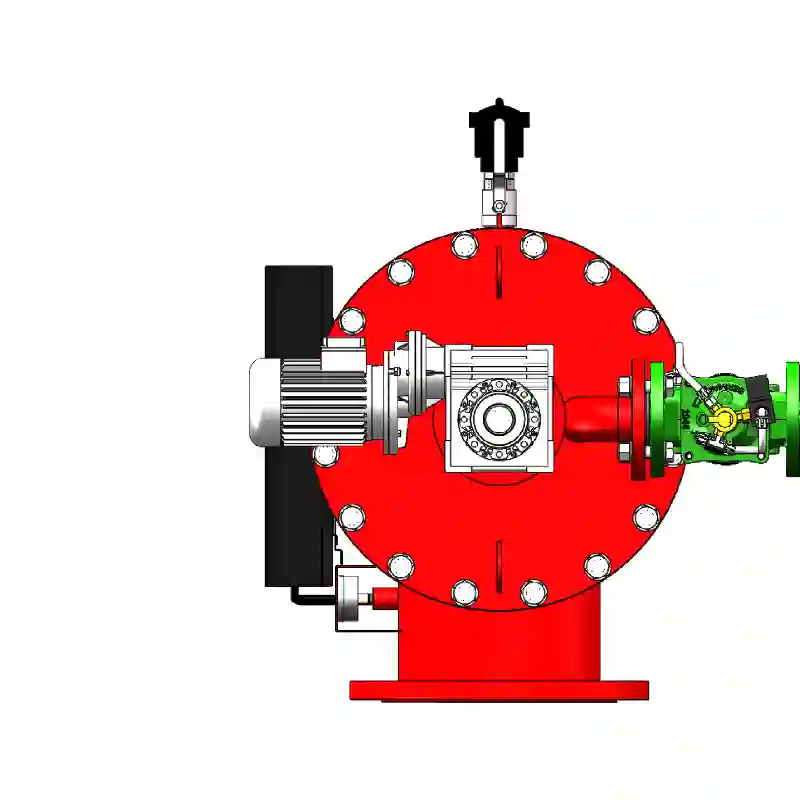
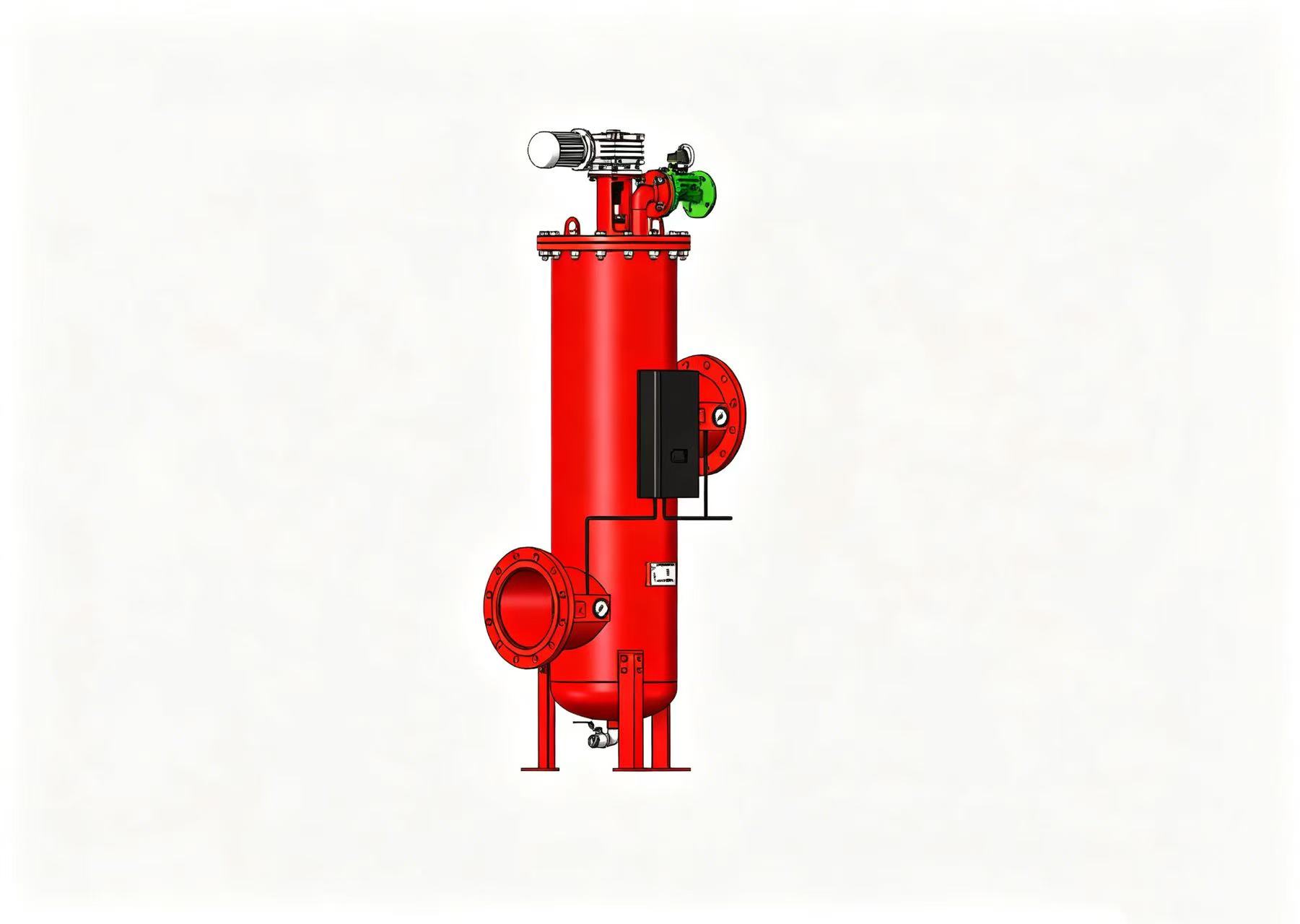
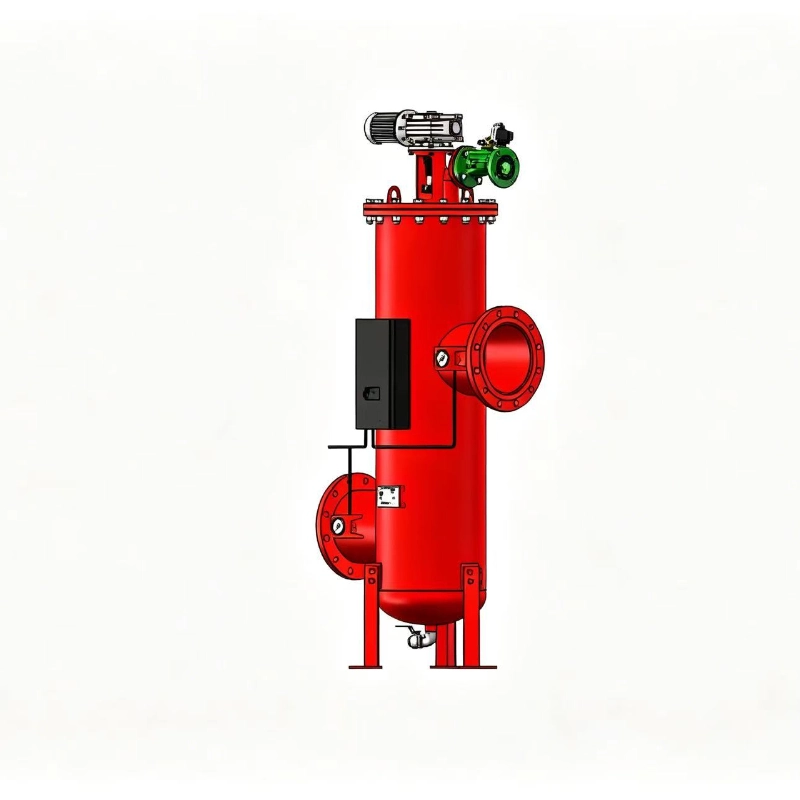
About Automatic Self-cleaning Filter System
Key Parameters
Single-unit flow rate: 25–2,800 t/h; higher capacities available through parallel installation
Filtration precision: 80–5,000 microns
Working pressure: 0.2–4.0 MPa, depending on model and configuration
Maximum operating temperature: 70°C
Cleaning control: Differential-pressure, time-based, or manual control
Cleaning cycle: Approx. 60 seconds
Cleaning pressure drop: 0.01–0.03 MPa
Control voltage: AC 220 V
Rated operating voltage: Three-phase 220 V / 380 V, 50 Hz