

What Criteria Define Qualified Stainless‑Steel Self‑Cleaning Filter for Seawater Desalination Pretreatment
Release time: 2026-09-28
Table of Contents
A qualified stainless-steel self-cleaning filter for seawater desalination pretreatment must do more than remove visible debris. It must operate reliably in a highly corrosive chloride environment, manage changing intake-water solids loads, protect downstream treatment equipment, and maintain stable flow with minimal operator intervention.
For desalination projects, filtration is often the first mechanical barrier between raw seawater and sensitive downstream systems. A well-selected stainless steel self-cleaning filter can help reduce the loading of sand, shell fragments, algae, marine organisms, suspended solids, rust particles, and other mechanical impurities before later pretreatment stages. Selection should be based on material compatibility, hydraulic performance, cleaning capability, filtration accuracy, automation, and site-specific operating conditions.
Why seawater pretreatment requires careful filter selection
Seawater is a demanding filtration medium. Its high chloride content creates corrosion risks, while intake conditions can change because of tides, storms, dredging, rainfall runoff, algae blooms, biological growth, or variations in coastal water quality.
A filter that performs reliably in ordinary industrial water may not necessarily be suitable for seawater desalination pretreatment. The selected system must withstand corrosive conditions while providing dependable filtration and automatic cleaning performance.
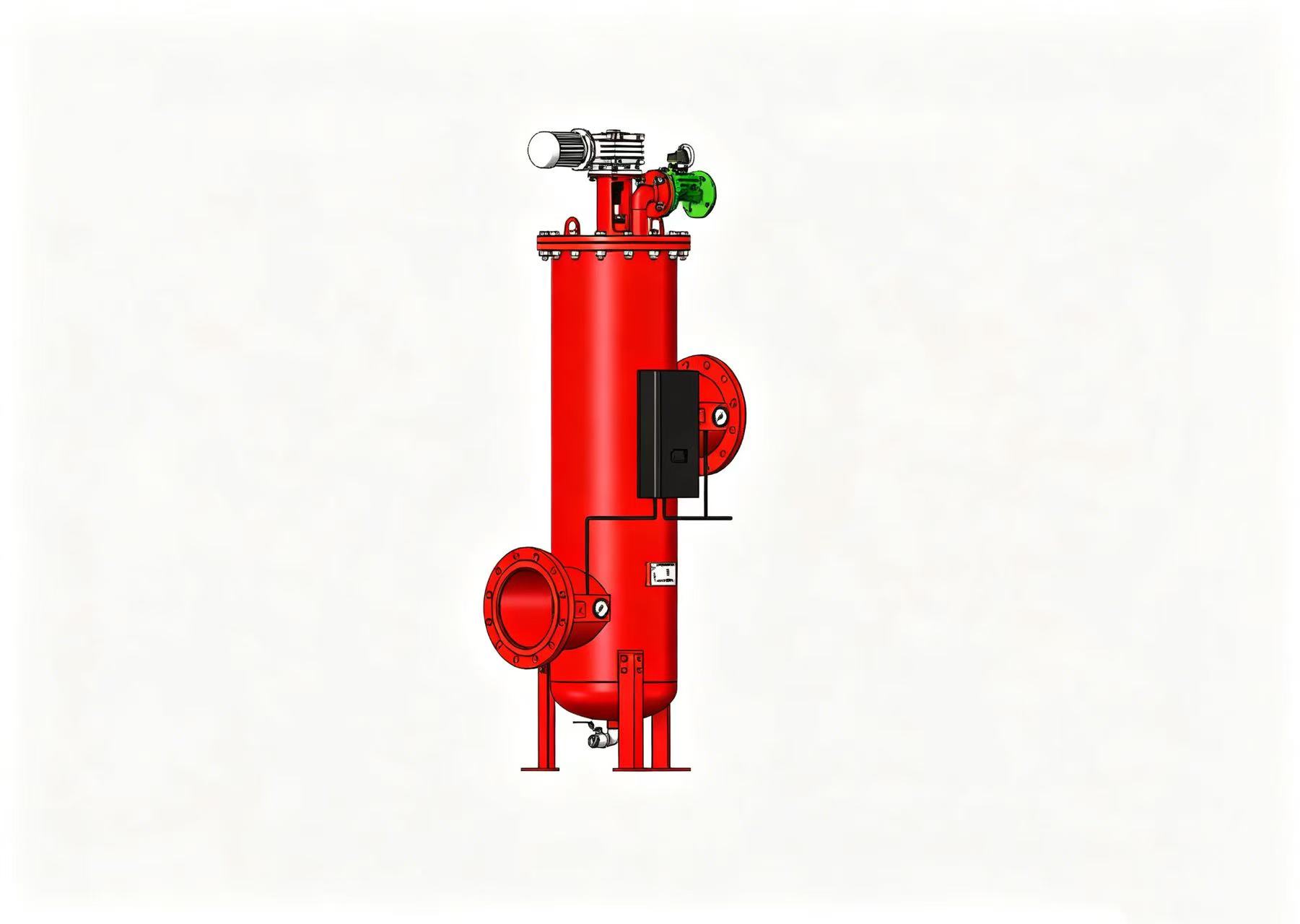
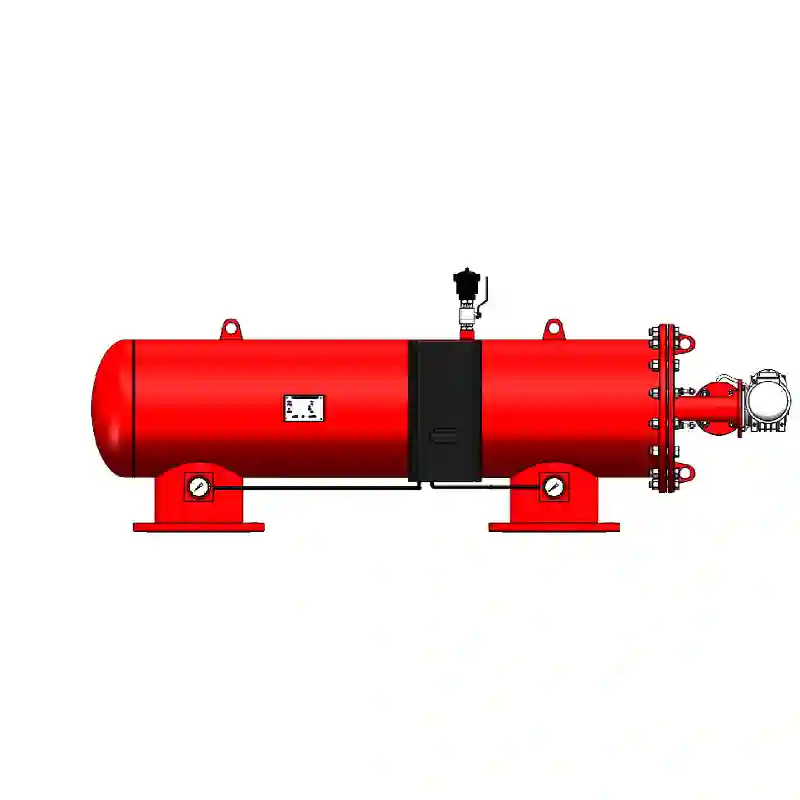
A properly configured Self-Cleaning Water Filter can support continuous operation by helping protect downstream pumps, multimedia filters, cartridge filters, ultrafiltration units, reverse-osmosis pretreatment equipment, cooling systems, and process-water equipment.
Materials and corrosion resistance
Evaluate all wetted components
The first qualification criterion is material compatibility. Seawater contains chlorides that can accelerate corrosion, especially around welds, fasteners, crevices, stagnant zones, threaded connections, and interfaces between different metals.
The engineering review should cover every wetted component, not only the filter housing:
- Filter body and cover
- Filter screen or mesh
- Internal cleaning components
- Drain valve and drain connection
- Flanges and fasteners
- Gaskets and seals
- Differential-pressure measurement components
- Actuated valves and internal fittings
The appropriate stainless-steel material grade should be confirmed according to actual seawater analysis, temperature, oxygen exposure, operating pressure, water velocity, chemical dosing, and project corrosion specifications.
Control galvanic corrosion risks
A corrosion-resistant filter can still experience problems if it is connected directly to incompatible metals. Seawater acts as an electrolyte, which can increase galvanic corrosion where dissimilar metals are electrically connected.
EPC teams should evaluate the materials of adjacent pipework, flanges, bolts, valves, supports, and grounding arrangements. Where appropriate, insulation kits, compatible fasteners, protective coatings, or engineered material transitions may be needed.
Hydraulic capacity and pressure loss
Size for real operating flow
The selected Industrial Self-Cleaning Filter should be sized using actual process conditions rather than nominal pipeline diameter or average daily flow.
The hydraulic evaluation should include:
- Minimum operating flow
- Normal operating flow
- Maximum continuous flow
- Peak or transient flow
- Future production expansion
- Available pump head
- Required downstream pressure
- Permissible clean pressure loss
Sizing only for average flow may create an unwanted restriction during maximum water demand. Higher-than-expected pressure loss can affect intake pump efficiency, reduce supply pressure to downstream pretreatment equipment, and increase cleaning frequency.
Define clean and dirty differential pressure
Differential pressure between the inlet and outlet increases as contaminants accumulate on the screen. A qualified filter should have an acceptable clean pressure loss at design flow and a defined differential-pressure threshold for initiating automatic cleaning.
The specification should clarify:
- Clean filter pressure loss at design flow
- Maximum allowable dirty pressure loss
- Differential-pressure cleaning set point
- High differential-pressure alarm point
- Available hydraulic margin from existing pumps
- Response plan for abnormal fouling conditions
The filter must be assessed as part of the full intake and pretreatment hydraulic system, including pumps, pipe friction, valves, elevation changes, pretreatment vessels, and the pressure required at downstream equipment.
Filtration accuracy and solids management
Match micron rating to downstream protection
Filtration precision should be selected according to the actual protection requirement of downstream equipment. A coarse screen can remove larger debris, seaweed, shells, sediment, and sand, while a finer screen may be required ahead of sensitive nozzles, cartridge filters, ultrafiltration systems, or other fine pretreatment stages.
The appropriate micron rating depends on particle-size distribution, suspended solids concentration, sand and sediment content, algae and organic contamination, the presence of marine organisms, downstream equipment sensitivity, required cleaning frequency, and allowable pressure-loss margin.
An excessively fine screen can increase pressure loss, cleaning frequency, backwash-water consumption, and maintenance requirements. A screen that is too coarse may allow damaging particles to reach downstream assets.
Consider seasonal and abnormal seawater conditions
Seawater quality can change considerably throughout the year. Algae blooms, high turbidity after storms, tidal variations, dredging activity, and coastal runoff can increase particulate and organic contamination.
An Automatic Self-Cleaning Filter System should be selected based on the most challenging credible operating conditions, not only clear-water performance. Where significant variation is expected, a pretreatment design may require upstream coarse screening, multiple filtration stages, parallel filter units, or standby capacity.
Automatic cleaning and drainage performance
Verify the cleaning mechanism
Self-cleaning performance is as important as filtration performance. The filter must be able to remove captured contaminants efficiently while supporting stable process operation.
Depending on the design, cleaning can involve suction scanning, flushing, brushing, scraping, or other mechanical methods. The selected filter should be suitable for expected seawater contaminants, including sand and mineral sediment, shell fragments, seaweed and fibrous debris, algae and biological solids, small marine organisms, scale particles, rust, corrosion products, and organic contaminants.
The engineering review should consider cleaning reliability under realistic solids conditions rather than only nominal performance under clean-water testing.
Confirm backwash and drain capacity
An Automatic Backwashing Filter requires adequate backwash and drainage conditions. The system design should confirm cleaning-cycle duration, backwash flow, available pressure, drain size, drain routing, discharge destination, and solids-handling requirements.
Insufficient drain capacity can reduce cleaning effectiveness and cause operational problems. The discharged water should be routed so that contaminants do not return to the intake zone or interfere with other plant systems.
Automation, installation, and maintenance
Integrate control functions with the plant
For seawater service, automatic control should support both process reliability and rapid response to changing contamination levels.
A practical control configuration may include:
- Differential-pressure-triggered cleaning
- Time-based preventive cleaning
- Manual cleaning mode
- High differential-pressure alarm
- Cleaning-cycle status indication
- Fault alarm output
- Local and remote operation
- PLC or DCS communication
Differential-pressure control responds to actual contaminant accumulation. Timed cleaning can be useful when biological matter or organic deposits build gradually without an immediate sharp rise in pressure loss. Combining both methods can provide more robust control under variable seawater conditions.
Plan for safe service access and uptime
Desalination plants often operate continuously, so maintainability should be evaluated before procurement. The installation should allow operators to inspect and service the equipment safely without creating excessive downtime.
Key project checks include available equipment footprint, inlet and outlet orientation, screen and internal-component access, clearance for servicing and lifting, drain-valve accessibility, control-panel location, outdoor protection requirements, bypass-line requirements, and parallel or standby filter requirements.
A single filter may be sufficient for a non-critical duty. For continuous desalination service, parallel or duty/standby arrangements may be more appropriate when uninterrupted filtered seawater supply is required.
Procurement qualification checklist
- Wetted-material compatibility with actual seawater chemistry
- Corrosion protection for the filter body, screen, valves, seals, and fasteners
- Required capacity at maximum continuous flow
- Clean pressure loss and maximum allowable differential pressure
- Filtration precision matched to downstream equipment
- Suitability for sand, algae, shells, biological solids, and marine debris
- Automatic cleaning method and cleaning-cycle reliability
- Backwash flow, drainage capacity, and discharge routing
- Differential-pressure, timer, and manual control options
- Electrical supply and PLC/DCS interface requirements
- Installation footprint and maintenance clearance
- Bypass, parallel, or standby configuration requirements
- Spare-parts availability and long-term service needs
Final considerations
The best self-cleaning filtration solution for desalination pretreatment is not defined only by its stainless-steel housing or nominal flow rating. It should be evaluated for corrosion resistance, hydraulic capacity, filtration accuracy, cleaning performance, drain design, control integration, maintainability, and suitability for variable seawater conditions.
A properly specified Self-Cleaning Water Filter can help reduce the solids burden on downstream pretreatment equipment and support more stable plant operation. FILIT provides industrial self-cleaning filtration equipment for process-water and water-treatment applications, with configurations that can be evaluated according to project flow, filtration, pressure, material, automation, and installation requirements.
FAQ:
What filtration accuracy is suitable for seawater desalination pretreatment?
The suitable micron rating depends on the filter’s role and the downstream equipment it protects. Coarser filtration can remove shells, sand, seaweed, and larger debris, while finer filtration may be required before cartridge filters, ultrafiltration systems, nozzles, or sensitive pretreatment equipment. Final selection should be based on actual seawater particle conditions and downstream protection requirements.
Is stainless steel suitable for seawater self-cleaning filtration?
Stainless steel can be suitable, but the selected grade and the full wetted-component design must match the seawater environment. Chloride concentration, water temperature, flow velocity, crevice exposure, chemical dosing, seals, valves, fasteners, and adjacent pipe materials should all be reviewed to reduce corrosion risk.
Will automatic backwashing interrupt desalination operation?
This depends on the filter design and installation arrangement. Many self-cleaning filters can complete an automatic cleaning cycle while the main filtration process continues. However, EPC engineers should verify backwash flow, available pressure, cleaning duration, drainage capacity, and whether a bypass or parallel filter arrangement is needed for uninterrupted seawater supply.