

Shallow Sand Filter vs. Multi-Media Filter: Which is Right for Your Plant’s Pre-Treatment?
Release time: 2026-07-14
Table of Contents
Selecting the optimal pre-treatment system is a critical decision for any industrial water purification process. The efficiency of your downstream equipment, such as reverse osmosis (RO) membranes or ion exchange resins, depends heavily on removing suspended solids and turbidity early on. Two of the most common and effective technologies for this purpose are the shallow sand filter and the multi-media filter. But when faced with the choice, how do you determine which system aligns best with your specific plant requirements?
In this comprehensive guide, we will delve into the mechanics, advantages, and ideal applications of both filtration methods, helping you make an informed decision for your industrial water treatment facility.
How Do They Work?
Before comparing the two, it’s essential to understand the fundamental operating principles of each filtration system. Both rely on physical straining to remove particulates from water, but their bed compositions and flow dynamics differ significantly.
The Shallow Sand Filter
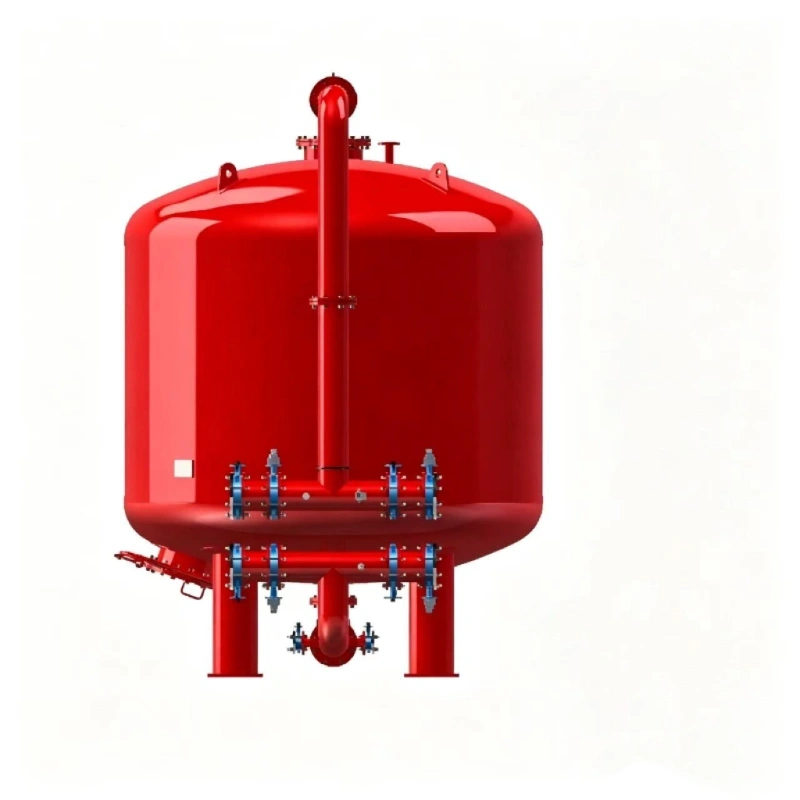
A shallow sand filter operates exactly as its name suggests. It utilizes a relatively thin layer of fine silica sand (typically 12 to 24 inches deep) supported by a collection system. The water flows downward through this single layer of uniform media. The filtration mechanism primarily occurs at the surface or within the top few inches of the sand bed.
This design allows for high flow rates and rapid filtration, making it a very efficient choice for specific applications. Because the bed is shallow, the backwashing process—which cleans the filter by reversing the flow—is typically shorter and uses less water compared to deeper bed systems.
The Multi-Media Filter
In contrast, a multi-media filter employs a deeper bed consisting of three or more layers of different granular materials. A standard configuration includes a top layer of coarse anthracite coal, a middle layer of fine silica sand, and a bottom layer of dense garnet. The layers are arranged in decreasing grain size and increasing density from top to bottom.
This strategic arrangement is crucial. As water passes through, larger particles are trapped by the coarse top layer, while finer particles are caught by the progressively smaller media below. This “in-depth” filtration allows the entire bed to hold suspended solids, significantly extending the time between backwashes and reducing the risk of premature clogging.
Key Differences and Performance Comparison
To determine the right fit for your plant, we must evaluate how these filters perform across several critical parameters.
1. Filtration Efficiency and Micron Rating
When it comes to particle removal capabilities, the multi-media filter generally outperforms the shallow sand filter.
- Shallow Sand Filters: Typically effective at removing particles down to the 15-20 micron range. This makes them suitable for relatively clean source water or as a roughing filter.
- Multi-Media Filters: Thanks to the layered design and dense garnet layer, these filters can reliably capture particles as small as 10-15 microns. If higher quality effluent is required, multi-media filtration is often the preferred choice.
2. Dirt Holding Capacity (Solids Loading)
This is a crucial factor in determining how often a filter needs backwashing.
- Multi-Media Filters: The graduated layering allows solids to penetrate deep into the bed. This “in-depth” filtration provides a massive dirt holding capacity. They can handle higher levels of incoming suspended solids without frequent backwashing.
- Shallow Sand Filters: Because filtration happens primarily near the surface, they have a lower dirt holding capacity. They will clog faster if subjected to high turbidity water, requiring more frequent backwash cycles.
3. Backwashing Requirements
Backwashing is necessary to clean the media, but it consumes water and energy.
- Shallow Sand Filters: While they may require more frequent backwashing if solids loading is high, the backwash cycle itself is usually quicker and requires a lower flow rate due to the shallow bed depth.
- Multi-Media Filters: They require less frequent backwashing, but the process is more rigorous. The backwash flow rate must be strong enough to lift and fluidize the heavy garnet layer at the bottom, which consumes more water per cycle.
4. Footprint and System Design
Space constraints are a reality in many commercial water filtration systems.
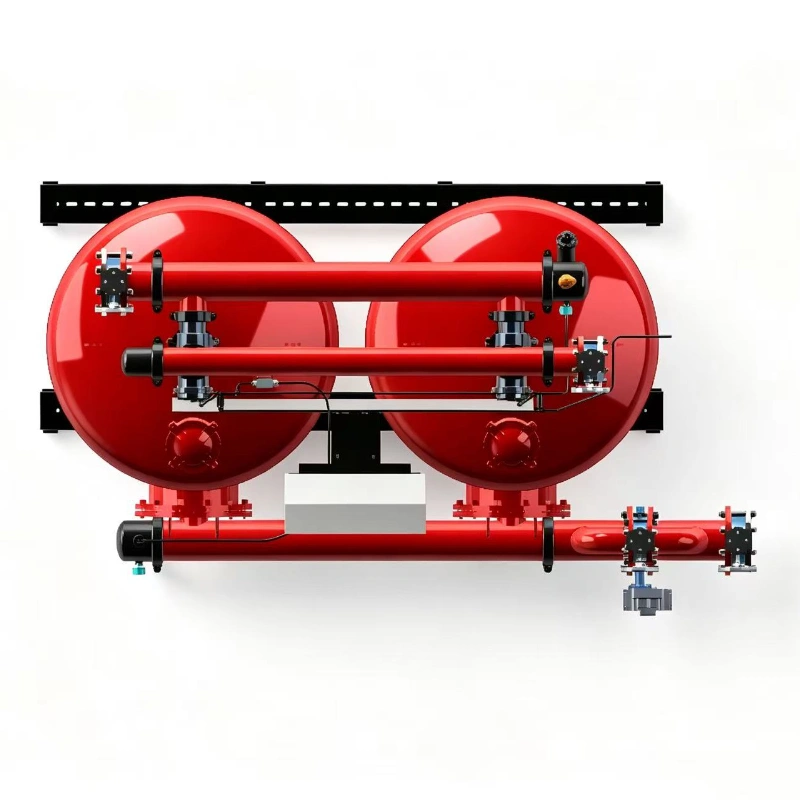
- Shallow Sand Filters: Often designed in modular, horizontal, or compact vertical configurations. They are generally more compact and suitable for tight spaces.
- Multi-Media Filters: Because of the deeper bed requirement, these vessels are typically taller and bulkier, requiring more vertical clearance.
| Feature | Shallow Sand Filter | Multi-Media Filter |
| Filtration Mechanism | Surface / Top layer | In-depth throughout the bed |
| Media Layers | Single (Silica Sand) | Multiple (Anthracite, Sand, Garnet) |
| Typical Micron Removal | 15 – 20 microns | 10 – 15 microns |
| Dirt Holding Capacity | Lower | Higher |
| Backwash Frequency | Higher (depends on loading) | Lower |
| Backwash Flow Rate | Lower | Higher |
| Space Requirement | More compact | Larger footprint |
Application Scenarios: Choosing the Right Filter
The choice between a shallow sand filter and a multi-media filter ultimately boils down to your specific water source and the requirements of your downstream processes.
When to Choose a Shallow Sand Filter
A shallow sand filter is an excellent and cost-effective choice in scenarios where the incoming water quality is relatively good, or where space is at a premium.
- Cooling Tower Side-Stream Filtration: Excellent for removing airborne dust and debris that accumulates in cooling tower basins.
- Irrigation Water Treatment: Effective at preventing emitter clogging in agricultural drip irrigation systems.
- Municipal Water Polishing: When the city water supply is already relatively clean but needs a final polish before industrial use.
- High-Volume, Low-Turbidity Applications: Ideal for high flow rates where the suspended solids load is consistently low.
When to Choose a Multi-Media Filter
A multi-media filter is the robust workhorse needed when dealing with higher turbidity or when downstream equipment demands superior water clarity.
- Reverse Osmosis (RO) Pre-Treatment: This is arguably the most common application. Protecting expensive RO membranes from fouling is paramount, making multi-media filtration the standard choice for most industrial RO systems.
- Surface Water Treatment: When treating water from rivers, lakes, or reservoirs, which often contain fluctuating and high levels of suspended solids and organics.
- Well Water with High Iron or Manganese: Often used in conjunction with oxidation processes to capture precipitated metals.
- Applications Requiring Minimal Operator Intervention: The extended run times between backwashes make them ideal for automated, continuous processes.
Making the Final Decision with FILIT
Selecting the correct filtration technology is not a one-size-fits-all endeavor. It requires a careful analysis of your water chemistry, flow requirements, space limitations, and budget. At FILIT, we understand that optimizing your pre-treatment is the foundation of a successful water purification strategy.
Whether your plant requires the high-flow efficiency of a high capacity shallow sand filter or the robust dirt-holding capabilities of a heavy-duty multi-media filter, our engineering team can help you design a system tailored to your exact needs.
Frequently Asked Questions (FAQs)
1. Can I upgrade an existing sand filter to a multi-media filter?
Yes, in many cases, it is possible to retrofit an existing sand filter vessel with multi-media. However, the vessel must be deep enough to accommodate the multiple layers, and the existing backwash pumps must have sufficient capacity to fluidize the heavier garnet layer. An engineering assessment is recommended before making this change.
2. How often should the filter media be replaced in these systems?
With proper backwashing and maintenance, filter media can last for several years. Generally, the media in a multi-media filter should be inspected annually and replaced every 3 to 5 years, depending on the severity of the water being treated. Shallow sand filter media may need slightly more frequent replacement if subjected to heavy organic loading.
3. What is the role of the anthracite layer in a multi-media filter?
Anthracite coal is the top layer in a multi-media bed. It is coarse and relatively light. Its primary role is to act as a roughing filter, capturing large particles and organic matter before they can prematurely clog the finer sand layer beneath. This significantly increases the filter’s overall dirt-holding capacity.