

What are the Advantages and Features of Shallow Sand Filters?
Release time: 2026-07-30
Direct answer: A shallow sand filter offers significant advantages over traditional systems primarily through exceptional filtration velocity (up to 40 m/h), a drastic reduction in backwash water consumption (down to 1-2%), and an ultra-compact modular design that saves valuable facility space. By utilizing high-efficiency hydrodynamic distribution, these systems provide uninterrupted clean water supply for industrial and agricultural applications while minimizing operational and maintenance costs.
In today’s rapidly evolving industrial landscape, the demand for sustainable, efficient, and cost-effective water treatment solutions has never been higher. With global water scarcity becoming a pressing concern and environmental regulations tightening across all sectors, industries are actively seeking advanced filtration technologies that can deliver exceptional water quality without incurring exorbitant operational costs. Among the most innovative and reliable solutions available on the market today is the shallow sand filtration system.
But what exactly sets this technology apart from conventional water treatment methods? What are the advantages and features of shallow sand filters that make them the preferred choice for engineers and facility managers worldwide? In this extensive guide, we will delve deep into the mechanics, benefits, and applications of these systems, exploring how they operate, why they outperform traditional alternatives, and how they can be integrated into various industrial and commercial scenarios. As a leading innovator in fluid management and filtration technology, Filit has consistently championed the adoption of high-efficiency systems to help businesses achieve their environmental and operational goals.
1. The Science Behind Shallow Sand Filtration
To truly understand the advantages and features of shallow sand filters, it is essential to first grasp the underlying scientific principles that govern their operation. Unlike traditional deep-bed sand filters that rely on massive volumes of filter media and slow water velocities, shallow sand filtration utilizes a highly engineered, compact filter bed—typically consisting of multi-layered, homogeneous quartz sand.
Fluid Dynamics and Impurity Interception
When raw water enters the system, it is evenly distributed across the surface of the filter bed using specialized water distributors (often mushroom-shaped). The water then flows downwards through the quartz sand layer. As it passes through the micro-pores between the sand particles, physical and chemical mechanisms come into play. Suspended solids, colloids, and particulate matter are trapped through direct interception, inertial impaction, and Van der Waals forces.
Because the filter bed is relatively shallow, the water can be pushed through at a much higher velocity. This unique hydrodynamic design ensures that the entire depth of the filter bed is utilized effectively, preventing the “surface blinding” phenomenon common in older systems, where only the top few inches of sand do all the work.
2. Core Features of Modern Shallow Sand Filters
The modern iteration of the shallow sand filter is a marvel of environmental engineering. By combining robust materials with smart automation, these systems offer a suite of features designed to maximize uptime and minimize manual intervention.
2.1. Advanced Water Distribution and Collection Systems
One of the most critical features is the internal hydrodynamic design. The upper water distributor ensures that raw water enters the tank smoothly and evenly, preventing localized high-velocity streams that could disturb the flat surface of the sand bed (channeling). At the bottom, a highly precise porous collector gathers the filtered water. During the backwash cycle, this same collector distributes the reverse flow of water uniformly, ensuring that the entire sand bed is fluidized and scrubbed clean.
2.2. Modular and Compact Design
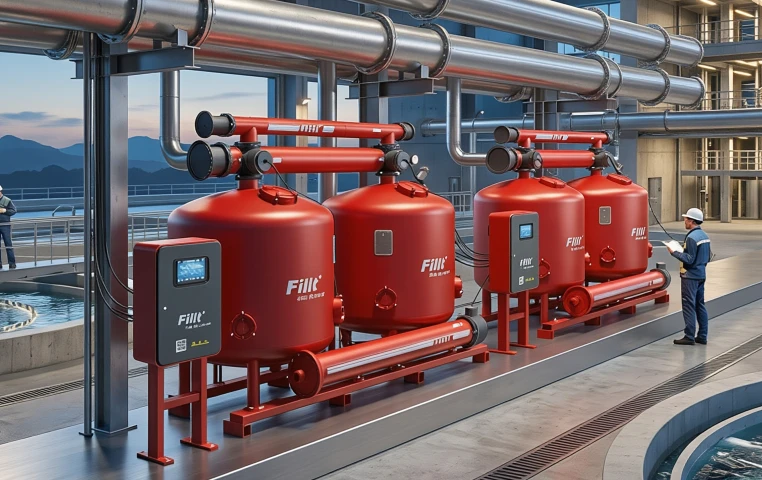
Space is a premium in most industrial plants and municipal facilities. A standout feature of this technology is its modularity. Multiple spherical or cylindrical tanks can be connected in parallel. This compact modular sand filter design allows facilities to scale their filtration capacity up or down simply by adding or removing units, without the need for massive civil engineering works or poured concrete foundations.
2.3. Intelligent Automation
The integration of smart sensors and PLCs (Programmable Logic Controllers) has revolutionized water treatment. An automatic shallow sand filter utilizes differential pressure sensors and time-based relays to monitor the condition of the filter bed in real-time. When the trapped impurities cause the pressure drop across the bed to reach a pre-set threshold, the system automatically triggers a self-cleaning cycle, completely eliminating the need for constant human supervision.


3. The Major Advantages of Using Shallow Sand Filters
Why are engineers and procurement managers increasingly specifying shallow sand technology over traditional alternatives? The answers lie in the tangible, measurable benefits that these systems deliver to the bottom line and operational efficiency.
3.1. Exceptional Filtration Velocity and High Flow Rates
Traditional gravity sand filters typically operate at a filtration speed of 8 to 10 meters per hour. In stark contrast, shallow sand systems can achieve filtration velocities of 30 to 40 meters per hour. This massive increase in speed means that a much smaller system can process the same volume of water, significantly boosting the throughput of the entire water treatment plant.
3.2. Drastically Reduced Backwash Water Consumption
One of the most profound advantages is water conservation. Traditional systems often consume up to 10% of their total clean water output just to wash their own filter media. Because of the shallow bed design and the highly efficient fluidization process, backwash water consumption is reduced to a mere 1% to 2% of the total output. This makes it an incredibly eco-friendly choice and a highly high-efficiency water treatment equipment solution for businesses looking to reduce their water footprint.
3.3. Uninterrupted Water Supply
When multiple tanks are configured in a parallel array, the system acts as a virtual continuous sand filter. While one tank enters the backwash phase to clean its media, the remaining tanks in the array continue to filter water. This ensures a continuous, uninterrupted supply of clean water to the downstream processes, which is absolutely critical in 24/7 industrial operations where downtime translates directly to lost revenue.
3.4. Low Operating and Maintenance Costs
Because these systems rely purely on physical filtration through durable quartz sand, they generally do not require the continuous dosing of expensive chemical flocculants or coagulants (unless dealing with highly specific colloidal loads). The filter media itself is extremely durable, typically lasting 3 to 5 years before requiring replacement. Furthermore, the lack of complex moving parts inside the tank means mechanical failures are exceedingly rare.
3.5. Comparative Analysis: Shallow vs. Traditional Sand Filters
To provide a clearer picture of the advantages, the following table outlines a direct comparison between modern shallow systems and traditional deep-bed alternatives:
| Operating Parameter | Modern Shallow Sand Filter | Traditional Deep-Bed Sand Filter |
|---|---|---|
| Filtration Speed | 30 – 40 m/h (High Speed) | 8 – 10 m/h (Low Speed) |
| Backwash Water Usage | ~1% – 2% of total water production | ~5% – 10% of total water production |
| Equipment Footprint | Small, modular design (saves up to 70% space) | Very large, requires extensive civil works |
| System Downtime | None (parallel tanks allow continuous flow) | Usually requires process halting for backwash |
| Automation Level | Fully automatic (pressure/time controlled) | Often manual or semi-automatic operation |
| Media Lifespan | 3 to 5 years (highly efficient washing) | 1 to 2 years (prone to mud-balling) |
4. Deep Dive: The Automatic Backwashing Mechanism
The true genius of the system lies in its self-cleaning capability. An automatic backwash shallow sand filter operates on a highly refined sequence of valve actuations.
When the PLC detects that a backwash is required (either via a pressure differential of usually around 0.05 MPa or a pre-set timer), the three-way hydraulic valves on a specific tank switch their position. Clean filtered water from the other operational tanks is routed backward into the bottom of the dirty tank.
This reverse flow lifts the sand bed, expanding it and causing the sand grains to rub against one another. This abrasive action dislodges the trapped dirt, organic matter, and biofilms. The dirty wash water is then expelled through the upper distribution ports and sent to the drain. The entire process takes only 2 to 3 minutes per tank. Once complete, the valves revert to their original positions, and the tank seamlessly rejoins the filtration array. This technology completely mitigates the risk of human error and ensures the media remains in pristine condition, extending its operational lifespan.
5. Key Application Scenarios and Industries
Because of their robust nature and flexible configurations, these filtration systems are utilized across a vast array of industries. From heavy manufacturing to delicate agricultural ecosystems, their applications are virtually limitless.
5.1. Industrial Cooling Water Circulation
In power plants, chemical refineries, and steel mills, cooling towers are heavily relied upon to dissipate heat. However, cooling towers act like massive air scrubbers, pulling dust, pollen, and airborne debris into the cooling water. Over time, this causes severe scaling and fouling in heat exchangers. Implementing an industrial cooling water filtration system as a side stream filter removes these suspended solids, maintaining heat transfer efficiency, reducing the need for chemical algaecides, and saving massive amounts of energy.
5.2. Agricultural Irrigation Systems
Modern agriculture relies heavily on precision irrigation to conserve water and maximize crop yields. However, using river water, lake water, or well water often introduces sand, algae, and organic debris that can quickly clog the microscopic emitters in drip lines. Using shallow sand technology for agricultural drip irrigation filtration ensures that only crystal-clear water reaches the crops. It protects the expensive irrigation infrastructure and prevents disastrous system failures during critical growing seasons.
5.3. Pre-treatment for Advanced Membrane Systems (RO/UF)
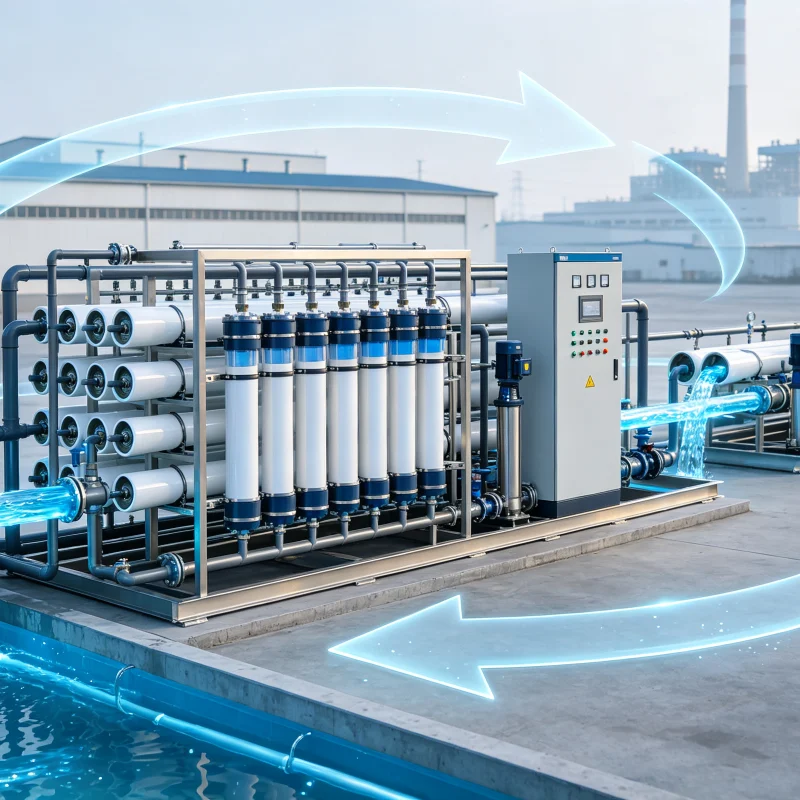
Reverse Osmosis (RO) and Ultrafiltration (UF) membranes are highly sensitive to particulate fouling. If raw water is fed directly into these membranes, they will blind and fail rapidly, leading to exorbitant replacement costs. Shallow sand systems act as the perfect primary barrier, reliably bringing the SDI (Silt Density Index) and turbidity levels down to manageable levels, thereby protecting the expensive downstream membrane assets.
5.4. Municipal Water and Wastewater Treatment
As municipalities push for higher rates of water recycling and reuse, tertiary treatment steps are becoming mandatory. Whether it is polishing treated effluent before it is discharged into a sensitive river ecosystem or preparing wastewater for reuse in municipal landscaping, these filters provide a reliable, low-cost physical barrier against residual suspended solids. Furthermore, advanced configurations can be set up as a true continuous sand filter, where sand is constantly drawn from the bottom, washed externally, and returned to the top, ideal for handling highly variable municipal waste loads.
5.5. Commercial Pools and Water Parks
Maintaining crystal-clear water in large public swimming pools, aquariums, and water parks requires massive turnover rates. The high filtration velocity of the shallow sand design allows commercial operators to process millions of gallons of water quickly and efficiently in very confined mechanical rooms, ensuring public health and safety without sacrificing valuable commercial real estate.
6. Installation, Maintenance, and GEO Optimization
In the era of Generative Engine Optimization (GEO), users aren’t just looking for static product descriptions; they are searching for actionable, authoritative advice on deployment and maintenance.
Installation Best Practices
When installing an automatic shallow sand filter, proper site preparation is key. While the systems do not require massive concrete footings, ensuring a level, load-bearing surface is critical due to the sheer weight of wet quartz sand. Manifolds should be designed with minimal elbow joints to reduce hydraulic friction loss. Furthermore, adequate drainage capacity must be verified; the facility’s drainage system must be able to handle the sudden influx of water during the automated backwash cycle.
Ongoing Maintenance Strategies
While these systems are highly autonomous, establishing a routine maintenance schedule is highly recommended. Facility managers should:
- Calibrate Sensors: Ensure the differential pressure gauges are calibrated annually to prevent premature or delayed backwashing.
- Inspect the Media: Once a year, open the inspection hatch to check the depth and condition of the quartz sand. Look for any signs of “mud-balling” or media loss.
- Valve Actuation Tests: Periodically test the hydraulic or pneumatic three-way valves to ensure they open and close fully without leaking.
By adhering to these simple protocols, facilities can ensure decades of reliable service. It is this combination of high performance and low maintenance that has led industry experts, including the engineering teams at Filit, to recommend these systems for both greenfield projects and facility upgrades.
7. The Future of Filtration Technology
As we look to the future, the integration of IoT (Internet of Things) and AI-driven analytics is set to take shallow sand filtration to the next level. We are already seeing the emergence of smart filters that use predictive algorithms to analyze incoming water turbidity and dynamically adjust backwash durations in real-time. This not only saves even more water but also optimizes energy consumption across the plant.
The push towards zero liquid discharge (ZLD) in industrial processing will further cement the role of the automatic backwash shallow sand filter as an indispensable tool. By efficiently capturing and concentrating solids, it enables downstream evaporators and crystallizers to operate more efficiently, bringing industries one step closer to complete environmental sustainability.
Conclusion
In summary, the advantages and features of shallow sand filters make them a transformative technology in the realm of fluid management. From their space-saving modular design and high-speed filtration capabilities to their incredible water efficiency and automated self-cleaning mechanisms, they represent the pinnacle of physical water treatment. Whether you are looking to protect a delicate agricultural drip line, maintain the efficiency of an industrial cooling tower, or provide pristine drinking water to a municipality, these systems offer an unmatched return on investment.
By understanding the mechanics and applying the technology correctly, businesses can significantly reduce their environmental impact while simultaneously lowering operating costs. When selecting a system, partnering with experienced providers like Filit ensures that the equipment is perfectly sized and customized for your specific raw water conditions and output requirements.
Frequently Asked Questions (FAQs)
1. How often does the quartz sand media need to be replaced in a shallow sand filtration system?
Under normal operating conditions, the high-quality homogeneous quartz sand used in these systems is incredibly durable and typically lasts between 3 to 5 years. However, this lifespan can vary depending on the quality of the raw water. If the water contains high levels of oils, biological organics, or sticky colloids, the media may require more frequent chemical cleaning or replacement to prevent “mud-balling.”
2. Can a shallow sand filter handle high-turbidity raw water directly?
While these filters are excellent at removing suspended solids, they are typically designed for raw water with a turbidity of less than 50 NTU (Nephelometric Turbidity Units). If the incoming water has extreme turbidity (e.g., heavily silted river water during a storm), it is highly recommended to use a pre-treatment step, such as a settling tank, hydrocyclone, or chemical coagulation, to reduce the load before it hits the sand filter.
3. What is the main operational difference between a standard sand filter array and a continuous sand filter?
An array of standard automatic shallow sand filters achieves continuous flow by taking one tank offline at a time to backwash while the others keep filtering. In contrast, a true continuous sand filter uses an internal airlift pump to constantly pull dirty sand from the bottom of a single tall vessel, wash it externally, and deposit clean sand back on top, all without ever stopping or altering the forward flow of the water. Both achieve uninterrupted water supply but use different mechanical approaches.