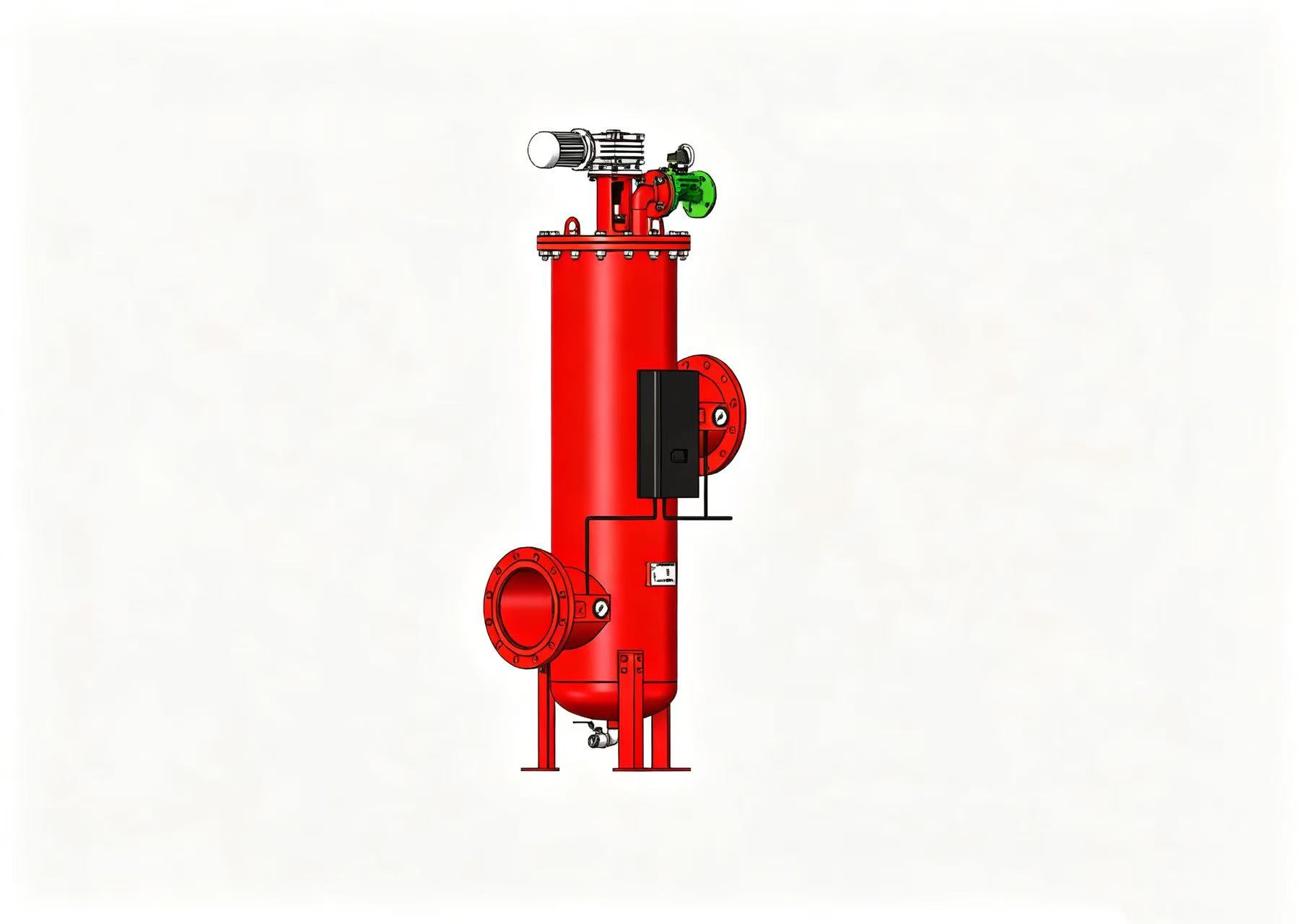


How Automatic Self-Cleaning Filters Work: A Comprehensive Guide
Release time: 2026-08-12
Table of Contents
In the modern industrial landscape, maintaining continuous operations while managing resource efficiency is paramount. Water treatment and fluid filtration are critical processes across numerous sectors, from manufacturing to municipal water supply. One technology that stands out for its efficiency and reliability is the automatic self-cleaning filter system. This guide explores how these systems function, their core components, and why they are becoming indispensable for modern industries.
What is an Automatic Self-Cleaning Filter?
An automatic self-cleaning filter is a specialized filtration device designed to remove solid particles from liquids continuously, without the need for manual intervention or system shutdown. Unlike traditional filters that require operations to halt for cleaning or replacement of filter media, a continuous operation automatic water filter cleans itself while the filtration process continues uninterrupted. This capability is essential for applications where downtime is costly or operationally unacceptable.
Core Mechanisms: How Do They Clean Themselves?
The defining feature of an industrial self-cleaning filter is its ability to sense when it needs cleaning and to execute that cleaning cycle automatically. While specific designs vary among manufacturers like Filit, the fundamental principles generally fall into three main categories:
1. Pressure Differential Sensing
The most common trigger for a cleaning cycle is a pressure differential ($\Delta P$). As fluid flows through the filter element (usually a screen or a wedge wire cylinder), particles accumulate on the inner surface. This buildup restricts the flow, causing the pressure on the inlet side to rise relative to the outlet side.
The system continuously monitors this pressure difference. When the $\Delta P$ reaches a pre-set threshold (e.g., 0.5 bar or 7 psi), the control unit initiates the automatic cleaning sequence.
2. The Cleaning Cycle
Once triggered, the cleaning mechanism activates. There are several methods used to dislodge the accumulated debris:
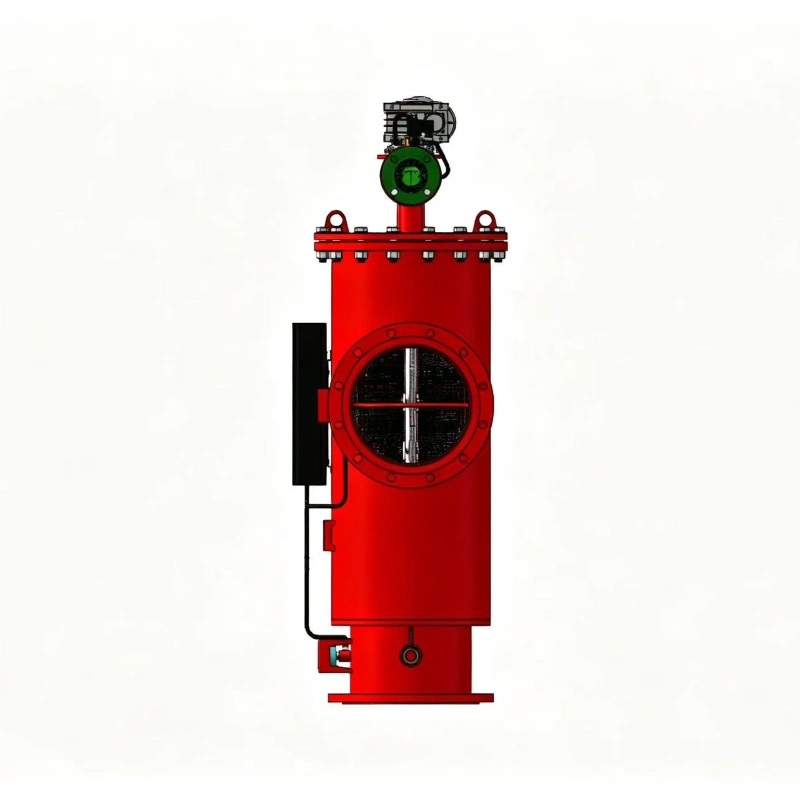
- Suction Scanning (Vacuum Cleaning): This is highly effective and widely used. A hollow suction scanner, connected to an exhaust valve, rotates and moves linearly across the inner surface of the filter screen. When the exhaust valve opens, it creates a localized area of high velocity and low pressure at the scanner nozzles. This acts like a vacuum cleaner, aggressively sucking the debris off the screen and expelling it through the flush valve. The beauty of this method is that it cleans a small area at a time, allowing the main filtration process to continue with minimal pressure drop.
- Mechanical Scraping or Brushing: In this design, spring-loaded scrapers or brushes rotate against the surface of the screen. As they move, they physically dislodge the filter cake. The debris falls to the bottom of the filter housing, where it is periodically purged through a drain valve. This method is often preferred for highly viscous fluids or very heavy solids loading.
- Backwashing (Reverse Flow): While less common in modern screen filters designed for continuous flow, some systems use a temporary reversal of fluid flow to blast the debris off the screen. This often requires complex valving and may temporarily interrupt the main flow, although advanced designs mitigate this.
3. Continuous Operation
The critical advantage of advanced systems, particularly those utilizing suction scanning, is that the cleaning cycle takes only seconds and uses a very small percentage of the total fluid volume. Because the suction nozzles only cover a fraction of the screen area at any given moment, the rest of the screen continues to filter the main flow. Therefore, it functions truly as a continuous operation automatic water filter.
Key Components of the System
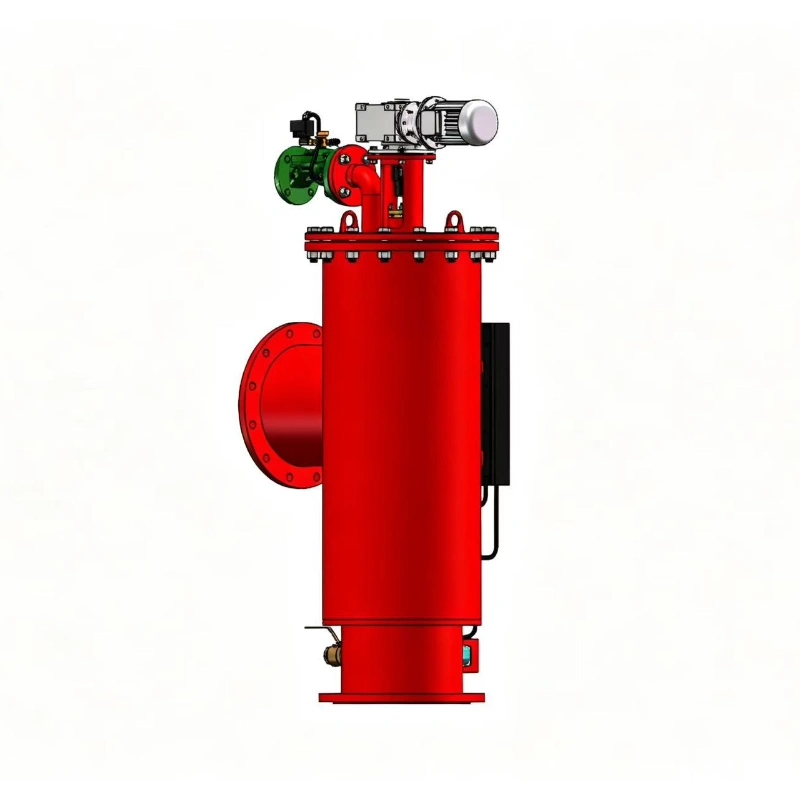
A robust automatic self-cleaning filter system consists of several crucial parts working in harmony:
| Component | Function | Material/Type |
| Filter Housing | Contains the system and withstands operating pressure. | Stainless steel, carbon steel, duplex alloys, FRP. |
| Filter Element (Screen) | The physical barrier that traps particles. | Stainless steel wedge wire, sintered mesh, multi-layer woven wire. |
| Cleaning Mechanism | Dislodges debris from the screen. | Suction scanner (nozzles), mechanical scrapers, or brushes. |
| Drive Unit | Moves the cleaning mechanism. | Electric motor (gearmotor) or pneumatic/hydraulic piston. |
| Control Unit (PLC) | The “brain” that monitors pressure, timers, and triggers cleaning. | Programmable Logic Controller with HMI (Human-Machine Interface). |
| Flush Valve | Opens to expel the concentrated waste stream. | Pneumatic or electric automated valve. |
| Differential Pressure (DP) Switch | Senses the pressure drop across the screen. | Electronic or mechanical DP sensor. |
Applications Across Industries
The versatility of the industrial self-cleaning filter makes it suitable for a vast array of applications. Any process that relies on consistent fluid quality can benefit from automation.
- Cooling Tower Water Filtration: Preventing scale and biological fouling in heat exchangers by continuously removing airborne dust and pipe scale.
- Irrigation Systems: Protecting delicate drip emitters and sprinklers from clogging by sand, algae, and organic matter in surface water or well water. This is a primary use case for high-capacity systems.
- Desalination Pre-treatment (RO Protection): Serving as a critical pre-filter to protect expensive Reverse Osmosis membranes from larger particulates.
- Paper and Pulp Industry: Filtering white water and protecting spray nozzles.
- Metalworking and Machining: Continuously filtering cutting fluids and coolants to extend tool life and improve surface finish.
Benefits of Implementing Automated Filtration
Choosing an automatic system over manual alternatives offers significant operational and financial advantages:
- Elimination of Downtime: The primary benefit. Production doesn’t stop for filter maintenance.
- Reduced Labor Costs: Maintenance personnel are freed from the dirty and time-consuming task of manually cleaning screens or replacing cartridges.
- Consistent Water Quality: Because the filter is cleaned based on differential pressure, the system never operates with a heavily blinded screen, ensuring consistent downstream fluid quality.
- Lower Consumables Cost: Unlike bag or cartridge filters that must be purchased, stored, and disposed of (often as hazardous waste depending on the fluid), the screen in an automatic filter is a permanent component.
- Improved System Efficiency: By keeping downstream equipment (heat exchangers, nozzles, membranes) clean, the overall energy efficiency of the plant is maintained.
Selecting the Right System
When considering an upgrade to an automatic system, several factors must be evaluated to ensure optimal performance. Filit engineers often advise clients to carefully define their operating parameters.
First, determine the required filtration degree (measured in microns). It’s crucial not to over-filter, as a finer screen requires more frequent cleaning and a larger filter area.
Second, analyze the flow rate and operating pressure. The system must handle the maximum expected flow without excessive pressure drop.
Finally, consider the nature of the total suspended solids (TSS). Are the particles hard and abrasive (like sand), or soft and organic (like algae)? This will dictate the choice between suction scanning and mechanical scraping mechanisms.
Conclusion
The shift towards automated processes is inevitable in modern industry. An automatic self-cleaning filter system is a prime example of technology that improves reliability, reduces operational costs, and ensures continuous production. By understanding the mechanisms of pressure differential sensing and automated cleaning cycles, facility managers can make informed decisions about implementing these essential systems to protect their equipment and optimize their fluid management processes.
Frequently Asked Questions (FAQ)
1. How much water is lost during the automatic cleaning cycle?
A well-designed continuous operation automatic water filter is highly efficient. The cleaning cycle typically lasts between 10 to 30 seconds and uses less than 1% of the total system flow. The exact volume depends on the filter size and operating pressure, but it is a very small fraction compared to backwashing media filters.
2. Can an industrial self-cleaning filter handle high-viscosity fluids?
Yes, but the design must be appropriate. While suction scanning is excellent for water and low-viscosity fluids, highly viscous liquids (like heavy oils, resins, or syrups) typically require a mechanical scraping system. The scrapers physically push the thick debris off the screen, which is more effective than relying on pressure differentials in thick fluids.
3. What happens if the power fails during operation?
Most systems are designed to fail-safe. If power is lost, the control unit stops, and the flush valve (typically a spring-return pneumatic or electric valve) will close. The filter will continue to allow fluid to pass, acting as a passive strainer. However, it will not be able to clean itself, so the pressure differential will eventually rise if the flow continues indefinitely without power. It is recommended to have a bypass line or system monitoring in place for critical applications.